Giza stays crowded for a reason. Thousands of years after laborers hauled limestone blocks across the desert floor, the structures they built still draw massive crowds to the edge of Egypt’s capital city. People spend hard-earned money and fly across oceans just to stand in the dust and look up at monuments created by a civilization that vanished long ago.
This enduring pull is not just about check-the-box sightseeing. Cairo holds onto global attention because its history remains physically present, massive, and strangely relevant to how we view our own place in human history.
The Reality of Scale At the Giza Plateau
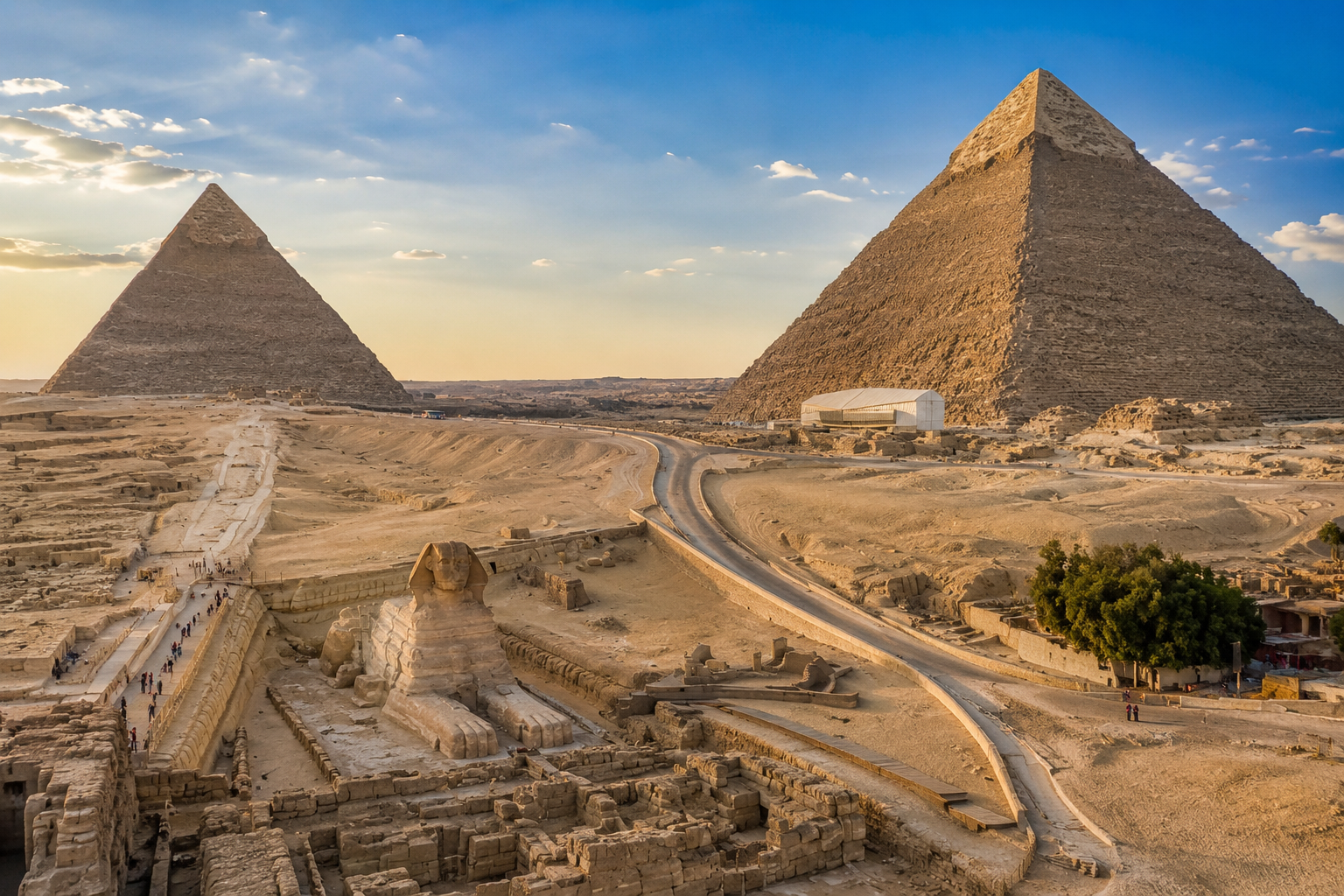
The sheer physical scale of the architecture forces people to stop and think. Photos do not prepare you for the actual footprint of the Great Pyramid of Giza. Standing at the base of the pyramid means looking at individual stone blocks that reach up to your chest and weigh several tons each.
Khufu’s monument stood as the tallest man-made structure on earth for over 3,800 years. Knowing that fact intellectually is completely different from watching the afternoon sun cast a mile-long shadow across the plateau. The physical presence of these stones creates an immediate connection to the past that smartphone screens can never replicate.
Modern Infrastructure Meets Ancient Cairo Stones
Recent infrastructural updates to the Giza Plateau have changed how tourists used to interact with the site. The Egyptian government spent over fifty million dollars implementing a major overhaul to clean up the area and improve visitor conditions.
New paved walkways, structured ticketing setups, and a fleet of clean electric buses running every five minutes have replaced the chaotic scrambles of previous decades. These changes make the location far more accessible, allowing visitors to focus on the archaeology rather than managing aggressive vendors or navigating traffic jams.
Inside the World’s Largest Single-Civilization Museum
The Grand Egyptian Museum, located just two kilometers down the road from the pyramids, has fundamentally altered the cultural landscape since its full opening. Spanning half a million square meters, it stands as the largest institution dedicated to a single civilization. Inside, tens of thousands of ancient objects sit in climate-controlled galleries.
The display setup moves away from the dusty, packed shelves of old-school exhibition spaces, creating clear historical context and advanced lighting instead. Seeing the intact, solid-gold burial equipment of Tutankhamun displayed within walking distance of the plateau where his ancestors built their tombs gives travelers a complete view of Old Kingdom and New Kingdom history in one afternoon.
Living History in the Streets of Old Cairo
History in this city exists outside museum walls as well. Cairo’s medieval heart preserves layers of Islamic, Coptic, and Roman architecture that function as living parts of the city. Walking through the massive stone gate of Bab al-Zuwayla puts you on streets that have served as commercial hubs since the Fatimid era.
Metalworkers still hammer brass plates, spice merchants stack bags of hibiscus flowers on the sidewalks, and the call to Islamic prayer echoes from hundreds of historic minarets simultaneously. Travelers walk the exact same pathways that medieval traders used when Cairo was the center of the global spice trade. The historical architecture functions as a working neighborhood, not a dead monument.
Saqqara and the Thrill of Active Discovery
Saqqara, located a short drive south of central Cairo, keeps the region in global headlines through constant new discoveries. Archaeologists uncover untouched burial shafts, painted wooden coffins, and mummification workshops on a regular basis.
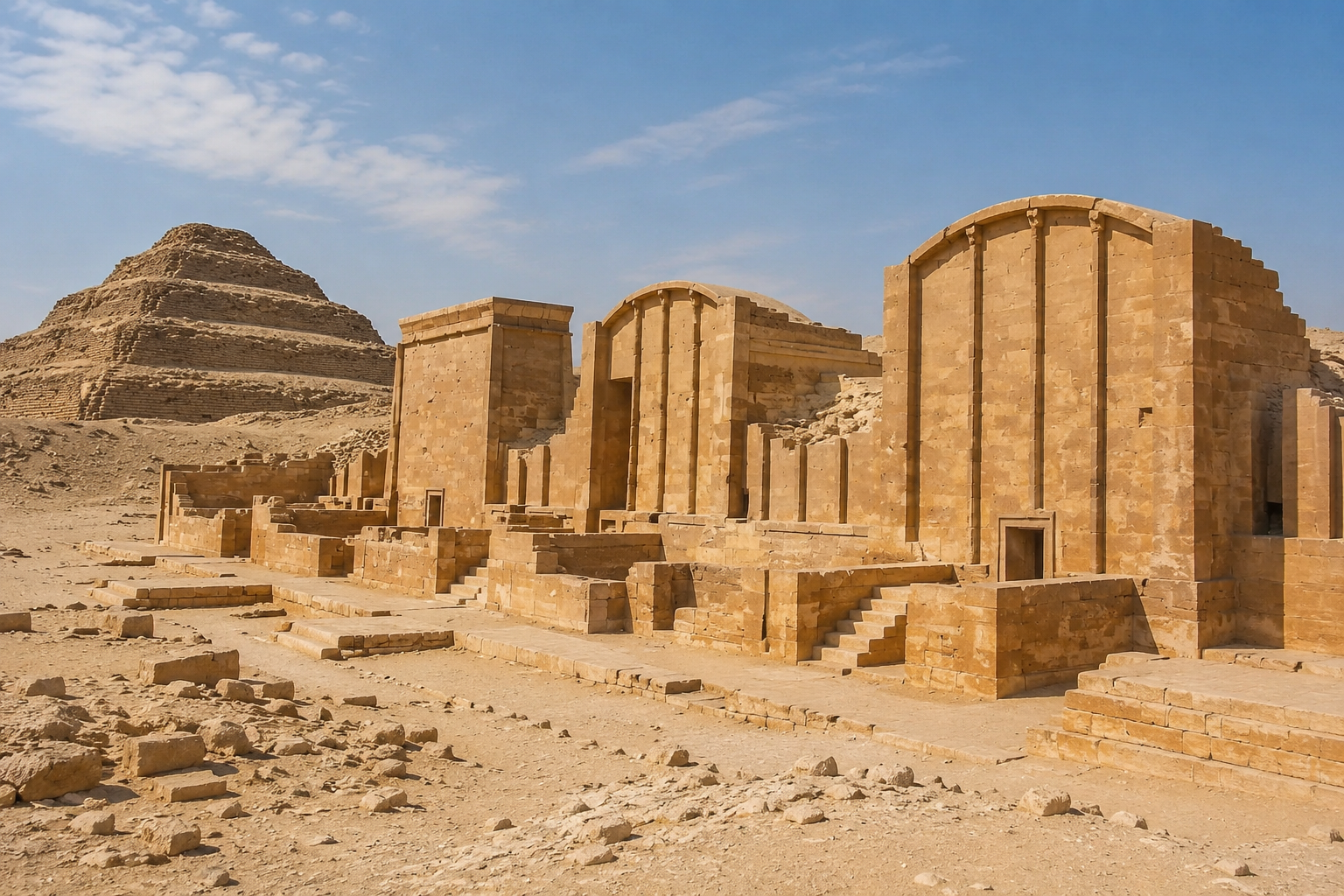
The Step Pyramid of Djoser, which represents the world’s oldest large-scale stone building project, provides a direct look at the experimental phase of royal engineering before the Giza pyramids were built. Visitors can look down into newly excavated shafts and realize that a significant portion of the society that was based in ancient Cairo still lies buried beneath the sand, where something new is explored every day.
Ancient Cairo & The Importance of Human Endurance
Human beings possess an innate desire to connect with things that outlast their own lifespans. We live in an era of rapid digital changes and temporary trends. Standing before structures that survived earthquakes, political collapses, and the rise and fall of multiple empires offers a rare sense of permanence.
The ancient builders used granite, limestone, and gold specifically because they wanted their names to endure forever. Every traveler who buys a ticket, walks past the Sphinx, or looks at a four-thousand-year-old hieroglyph fulfills that original ancient wish. Cairo holds its position as a primary global destination because it provides a direct, physical encounter with human endurance.