There’s something immediately different about the Seychelles, and you notice it before you’ve even unpacked. Giant granite boulders, some the size of houses, line the shorelines in a way that looks almost too dramatic to be real. This is what separates this 115-island archipelago from every other island chain on earth, and it’s what makes photos of the place look like they’ve been edited when they haven’t.
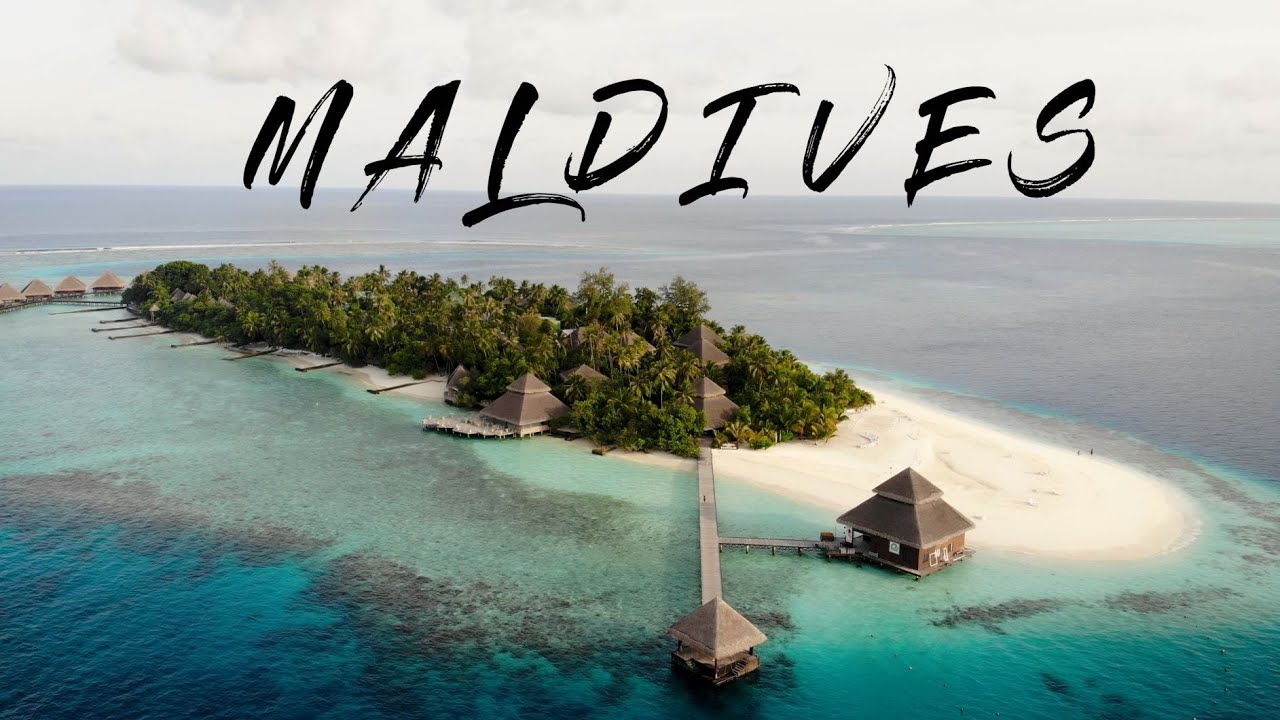
For a long time, though, it was genuinely hard to get to and even harder to book a high-end stay. Travelers chasing premium island experiences mostly defaulted to the Maldives or French Polynesia, reliable, beautiful, and familiar. But that’s been changing, and noticeably so.
A combination of serious hospitality investment, strict conservation limits, and better long-haul flight connections has quietly repositioned how global travelers think about these islands.
The Geography of Total Isolation
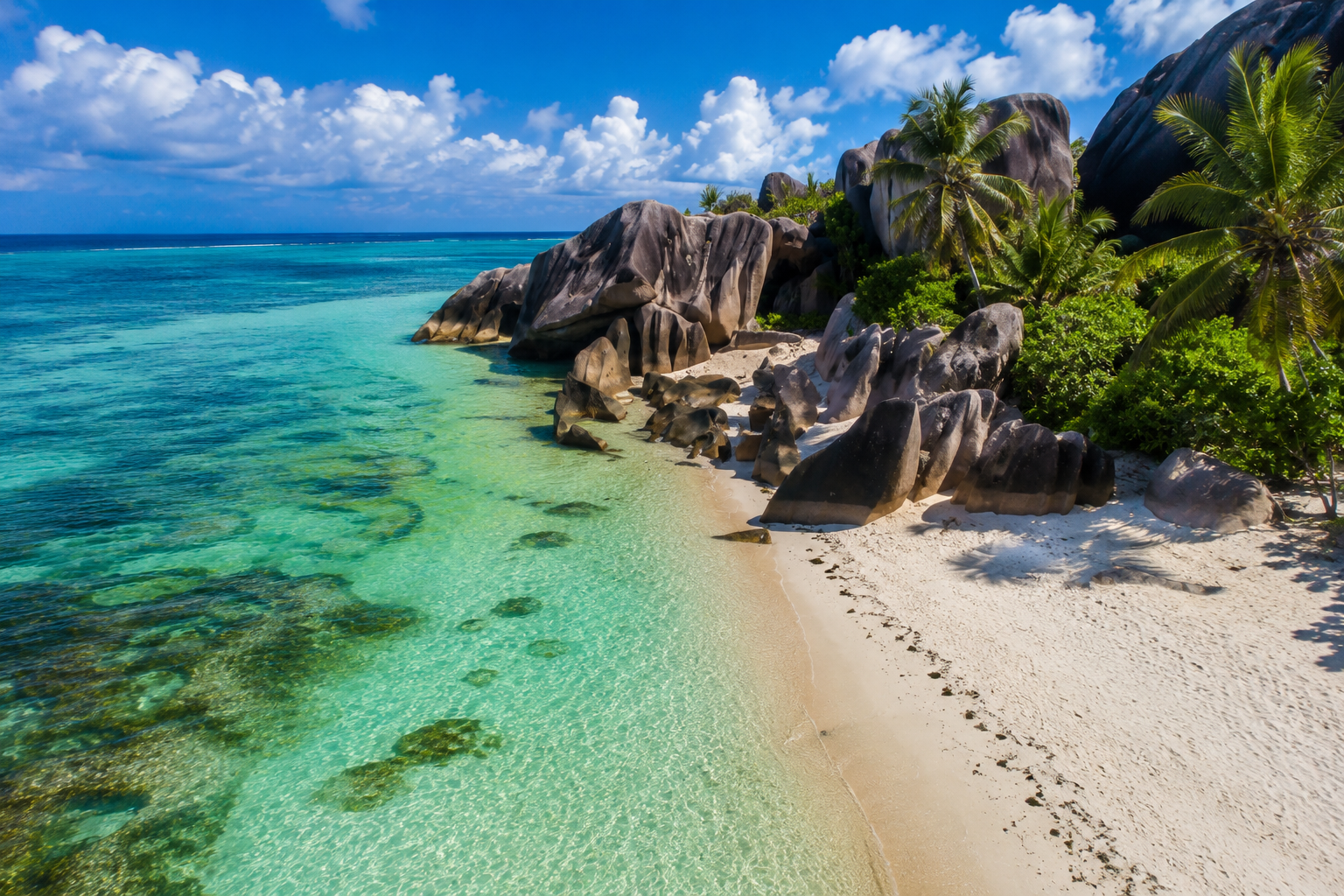
The geography here is doing a lot of the heavy lifting, and that’s exactly the point. Unlike the flat coral atolls that barely sit above sea level across much of the Indian Ocean, the inner islands of the Seychelles are ancient granite formations, mountainous, dense with tropical growth, and genuinely dramatic to look at. That elevation gives property developers something most island destinations don’t have: natural structure. Villas cling to hillsides. Massive stone formations provide natural shelter right on the sand.
Anse Source d’Argent on La Digue is probably the clearest example of why this landscape commands such extraordinary prices. The Seychelles beach is broken up by eroded grey granite pillars that create natural partitions along the shoreline. You’re not looking out at a wide-open, generic horizon from a sandbox. You’re sitting in a sheltered cove with forest growing right down to the water’s edge, with no one visible in either direction. The topography does the work that artificial walls and fences would have to do anywhere else. That kind of natural seclusion is genuinely rare, and the market has figured that out.
Private Islands and Strict Footprint Limits
One of the smarter things the Seychellois government has done is keep a firm cap on how much can actually be built. Regulations restrict hotel sizes and enforce strict building ratios, which means hospitality brands can’t come in and stack up multi-story hotel blocks. Instead, they’re pushed toward spacious individual villas spread across large plots of land. The result is a country that has quietly become a global hub for private island stays.
North Island sets the tone for this model pretty clearly, just eleven enormous villas across an entire eco-reserve, where guests share the land with Aldabra giant tortoises that are over 150 years old and couldn’t care less about your holiday. Platte Island has the newly opened Waldorf Astoria, which runs heavily on its own solar fields and on-island vegetable gardens to support a private villa layout.
Fregate Island is going through a complete overhaul, redesigning toward low-density residential structures that use only a fraction of the available land. The logic behind all of this is simple: limit the total number of beds across the archipelago, and you guarantee that Seychelles beaches remain less crowded.
The Arrival of Global Design Heavyweights
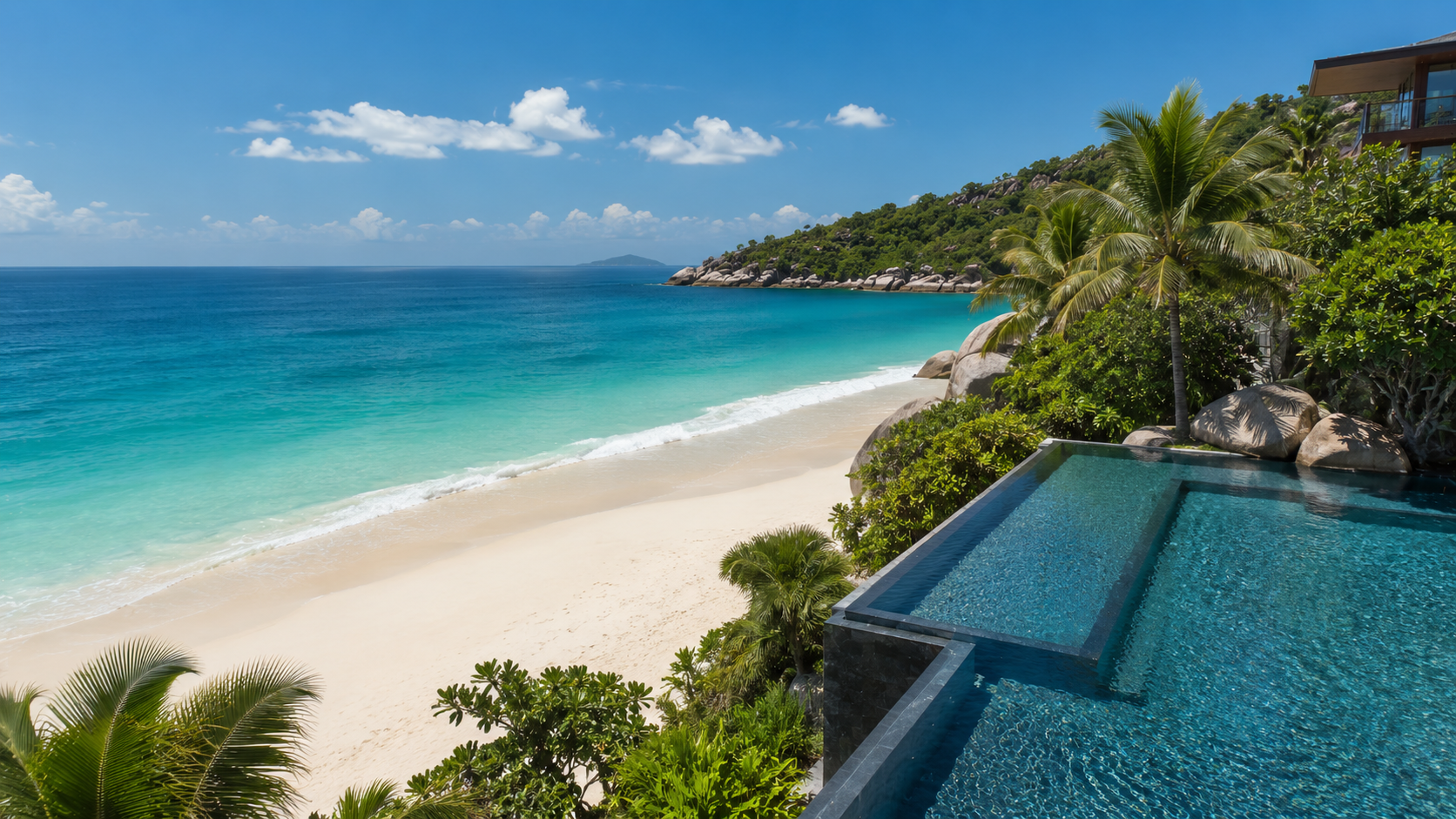
The old island design playbook, dark wood, thatched roofs, and colonial-style furniture in Seychelles, is being replaced by something with a lot more edge to it. The opening of Cheval Blanc Seychelles on Mahé was a turning point. Clean white minimalism, private pools, sharp architectural lines planted directly on the sands of Anse Intendance, it reset what visitors expected to find here.
The upcoming Meliá Seafront property on Mahé is bringing more of that energy, including what will be the country’s first dedicated hotel rooftop bar. These newer spaces are built around high ceilings, floor-to-ceiling glass walls, and serious climate systems that handle tropical humidity without making you feel like you’re hiding from the outdoors.
The materials are chosen to hold up against sea salt without looking heavy or dated. The end result is something genuinely interesting, the amenities of a well-designed city hotel, with a prehistoric jungle and turquoise water outside the window.
Conservation as a Structural Policy
Something that increasingly matters to today’s luxury traveler is knowing that the place they’re visiting will still exist in fifty years. The Seychelles has addressed that in a way few destinations have matched. It became the first country in the world to legally protect nearly half of its total land territory. That commitment extends to places like the Vallée de Mai on Praslin, a prehistoric forest that is the only native home of the Coco de Mer palm, which grows the largest seed in the plant kingdom and looks like something out of a fantasy novel.
The marine protection areas are equally serious, covering hundreds of thousands of square kilometers of the surrounding ocean. Guests staying at Six Senses Zil Pasyon can swim off their deck directly into active coral restoration zones. Because commercial fishing is banned near the resort islands, the water is genuinely full of life, eagle rays, hawksbill turtles, and diverse fish populations going about their business. It is not a manicured beach that needs constant artificial sand pumping to keep from disappearing.
Direct Access and New Flight Corridors
Better access has helped enormously without diluting what makes the destination special. Major international carriers now run direct scheduled routes into the international airport outside Victoria on Mahé. Private aviation facilities have expanded, too, with infrastructure that lets a guest land a private aircraft and transfer to an island-hopping helicopter in under thirty minutes.
In practical terms, that means someone can leave a European city in the evening and be sitting on a private Seychelles beach by the following morning. When you pair that kind of transit ease with resort architecture that would hold its own in any major design city, and a genuine government-level commitment to keeping the environment intact, the Seychelles doesn’t need to compete for its position at the top of the luxury travel conversation. It’s already there, and it’s not in any particular hurry to change.