Thirty-seven million people live across the interconnected districts of Japan’s capital, making this urban expanse one of the largest metropolitan areas on earth. Finding your footing here requires moving past high-density photos and organizing your trip around clear geography, efficient train loops, and separate neighborhood sectors.
Spending hours riding back and forth on subway trains drains your energy quickly. Using a practical Tokyo travel guide ensures you organize your schedule efficiently, allowing you to spend more time inside specific historic districts, serene temple grounds, and late-night dining alleys.
Anchor Your Base: Best Areas to Stay in Tokyo
Deciding where to sleep shapes your entire daily schedule. Selecting the best areas to stay in Tokyo depends on what you want right outside your hotel door, whether that means high-speed rail access, massive shopping centers, or quiet nighttime streets.
Shinjuku
Transit connections make this western hub a dominant choice for first-time visitors. Shinjuku Station handles millions of daily passengers, linking travelers directly to regional express trains bound for Hakone and Mount Fuji.
Surrounding streets host late-night izakayas inside Golden Gai, high-rise hotel towers, and expansive green lawns at Shinjuku Gyoen. Visitors can also access free city views from the twin observation decks inside the Tokyo Metropolitan Government Building.
Shibuya
Walkability defines this central commercial zone. Staying near Shibuya Station places you steps away from major shopping avenues, world-class coffee bars, and extensive dining spots. Youthful energy dominates the block, making it ideal for travelers who want constant action outside their hotel lobby. Walking routes lead directly north into the leafy fashion avenues of Omotesando and Harajuku.
Asakusa
Budget travelers often favor this eastern neighborhood for lower hotel rates and a slower pace. Low-rise wooden structures and traditional storefronts replaced glass towers here, creating quiet evening streets after day-trip crowds head back downtown. Direct express train links to Narita Airport make arrival and departure logistics remarkably simple.
Iconic Historic Sites and Top Tokyo Tourist Attractions
Primary sights sit scattered across eastern and western sectors, requiring a structured neighborhood approach to avoid zig-zagging across town. Grouping your daily activities by geographical clusters protects your stamina and maximizes your time at key Tokyo tourist attractions.
Senso-ji Temple and Nakamise-dori
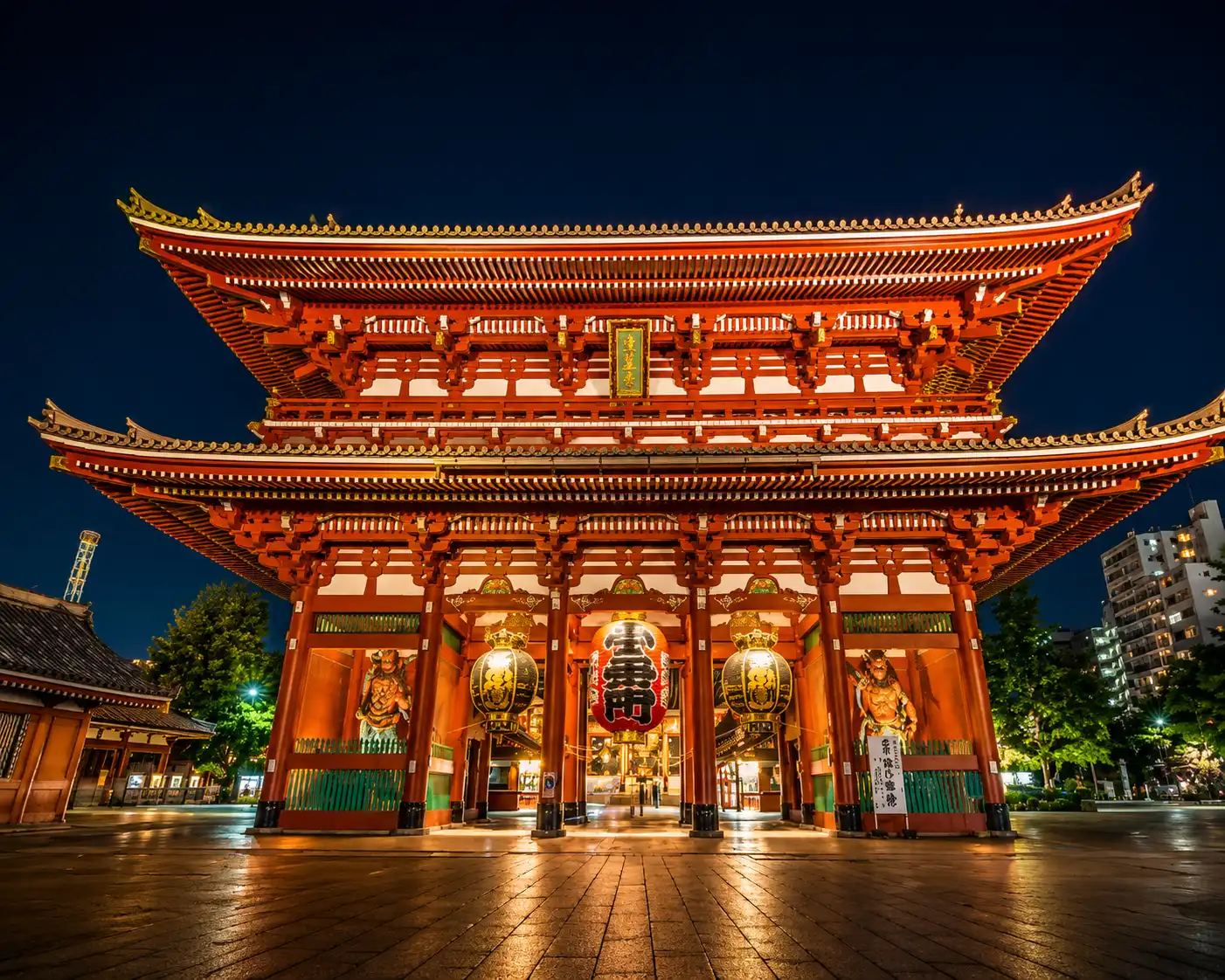
Asakusa houses the oldest religious site in the city, established back in the seventh century. Visitors enter through the massive Kaminarimon gate before walking down Nakamise Street, where historic market stalls serve fresh rice crackers and sweet bean pastries. You can also find the main hall nearby just beyond the shopping street, a five-story pagoda, and a large incense burner where visitors wave aromatic smoke over themselves for good health.
Shibuya Crossing and Shibuya Sky
Pedestrians surge across this multi-way intersection whenever the signals change, moving up to three thousand people per light cycle. Looking down from the second floor of the train station reveals the coordinated human flow below. Nearby, the Shibuya Sky open-air deck offers panoramic 360-degree viewpoints 750 feet above the pavement, giving visitors clear line-of-sight views extending all the way to Mount Fuji on sunny days.
Tsukiji Outer Market and Toyosu
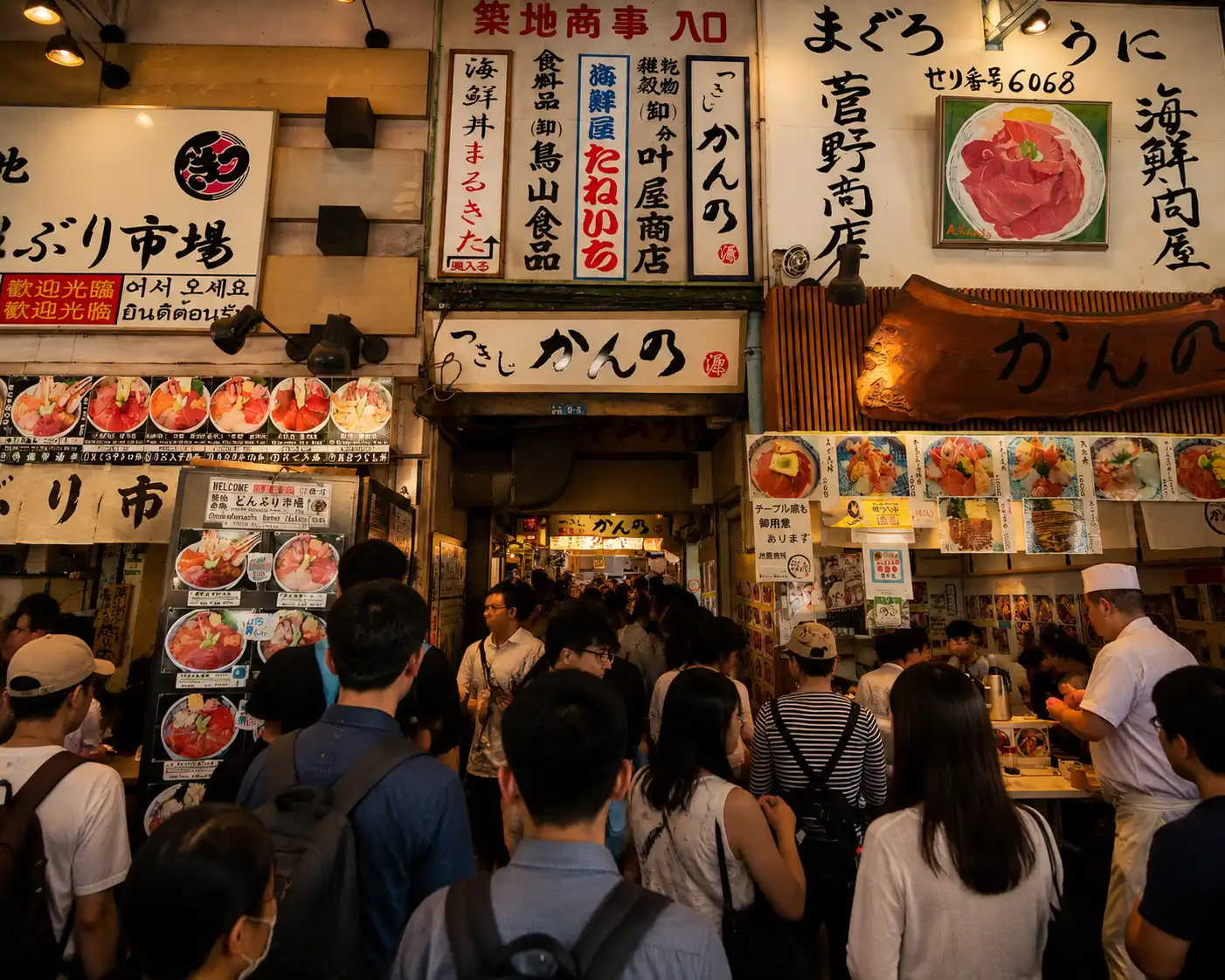
Seafood operations moved their wholesale tuna auctions to modern facilities in Toyosu, but Tsukiji’s historic outer market still serves incredible street food. Vendors grill wagyu beef skewers, tamagoyaki egg omelets, and fresh sea urchin along narrow outdoor lanes. Arriving around 8:00 AM yields the freshest breakfast options before stalls close in the early afternoon.
Meiji Jingu Shrine
Thick evergreen forest surrounds this Shinto shrine in Shibuya, insulating visitors from urban traffic noise. Over one hundred thousand donated trees form the dense canopy leading to a massive wooden torii gate built from ancient Taiwanese cypress. Gravel paths offer a quiet morning walk before exploring adjacent shopping corridors.
Transit Logistics and Moving Between Districts
Rail transport runs with mathematical precision across all twenty-three wards. The circular JR Yamanote Line functions as the transport backbone, connecting major hubs like Shinjuku, Shibuya, Akihabara, Ueno, and Tokyo Station on a continuous loop.
Buying individual paper tickets for every subway leg wastes valuable time. Loading a digital Suica or Pasmo card directly into your smartphone wallet allows you to swipe through turnstiles instantly. Digital transit cards also pay for items at coin lockers, drink vending machines, and corner markets. Long-distance bullet train reservations to Kyoto or Osaka work best when booked ahead via the official SmartEX app to skip station window lines. Travelers carrying large luggage can utilize national forwarding services like Takuhaibin to ship heavy suitcases directly between hotels overnight.
Local Protocols and Money Management
Public behavior follows distinct social guidelines that help millions live closely together without friction. Eating or drinking while walking down public sidewalks is considered improper, so finish snacks near the food stall where you bought them.
Train carriages remain quiet spaces where phone calls and loud conversations are strictly discouraged. Tipping at restaurants or inside taxis does not exist and can cause confusion, as exceptional service is built into standard pricing. Taxi doors open and close automatically via driver controls, so avoid pulling handles manually.
Public trash cans do not exist along city streets, meaning you must hold onto your personal garbage until returning to your hotel room or convenience store recycling bins. Physical cash remains necessary despite growing credit card acceptance across major department stores.
Small ramen shops, temple entry gates, and local transit coin lockers require physical Japanese yen. 7-Eleven convenience store ATMs accept international debit cards 24/7 with minimal processing fees, making cash withdrawals simple anywhere in the city.