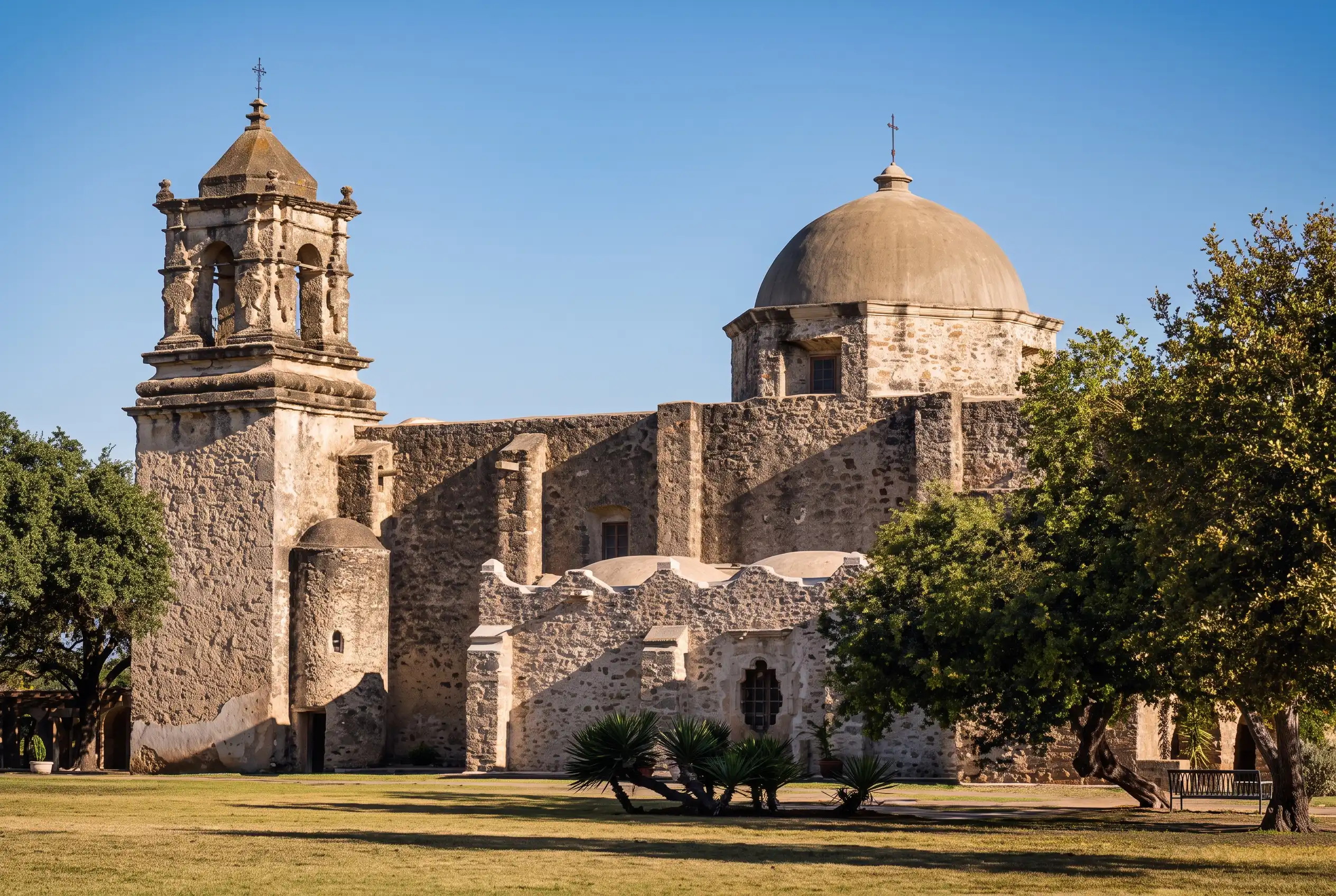
San Antonio’s mission history extends well beyond the Alamo. Four Spanish colonial mission communities sit south of downtown along the San Antonio River, each with an active church, historic grounds, and surviving landscape features.
This San Antonio Missions guide explains what distinguishes the four locations managed by the National Park Service and how to visit them without rushing. Admission is free, but the missions are spread across several miles. Choosing a realistic route and transportation method therefore matters more than the cost of admission.
Understanding the San Antonio Missions
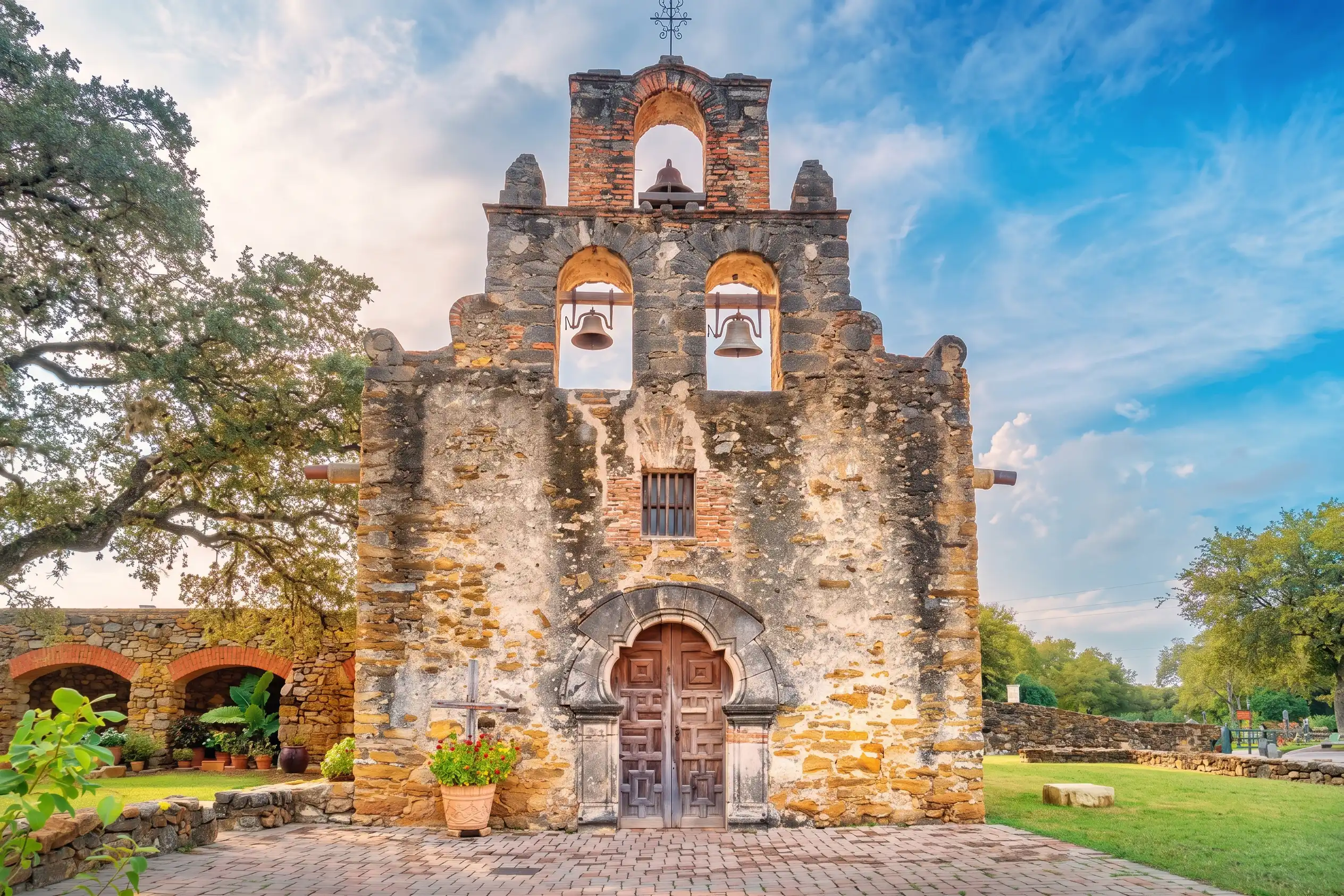
San Antonio Missions National Historical Park includes Mission Concepción, Mission San José, Mission San Juan, and Mission Espada. The Alamo, originally known as Mission San Antonio de Valero, is not managed as part of the national historical park. However, all five missions collectively form the San Antonio Missions UNESCO World Heritage Site.
These places were more than church buildings. They were colonial communities where Spanish authorities and Franciscan missionaries sought to convert Indigenous people, reorganize their communities, and extend Spanish control during the 1700s. The National Park Service interprets this history through architecture, cultural landscapes, exhibits, and ranger programs. A thoughtful visit should consider colonization, cultural change, Indigenous resilience, and the communities that remain connected to the missions today.
Mission Concepción
Mission Concepción is the northernmost of the four park missions and the closest to downtown San Antonio. Its church is recognized by the National Park Service as the oldest unrestored stone church in the United States. Visitors can also see surviving interior frescoes that provide a rare connection to the building’s early appearance. Its location makes it a practical first stop when traveling south from downtown.
Mission Concepción has a smaller complex than Mission San José, but it should not be treated as a brief photo stop. Take time to examine the church, frescoes, convento, and surrounding grounds. The church remains an active Catholic parish and may temporarily close for Mass, weddings, funerals, or other services. Speak quietly, dress appropriately, and follow all posted instructions when entering.
Mission San José
Mission San José is the largest mission complex in the park and the best place to begin if you want historical context before exploring the other sites. The property contains the main visitor center, museum exhibits, a bookstore, a free 20-minute orientation film, and the well-known Rose Window. Its restored structures help visitors understand that a mission included living quarters, work areas, storage buildings, and agricultural systems in addition to a church.
Allow more time here than at the other missions, particularly if you plan to watch the film and attend a ranger program. Free guided programs are currently offered at scheduled times, but afternoon programming may vary. Begin at the visitor center, review the daily schedule, and then explore the complex. Check the park website shortly before visiting because program times can change.
San Antonio Missions Guide to the Southern Sites
Mission San Juan and Mission Espada receive less attention than Mission San José, but they help complete the story. Both sites reveal the importance of farming, irrigation, and the surrounding landscape to mission life. They also tend to feel quieter because they have fewer visitor facilities and shorter interpretive routes. Allow approximately 30 minutes at each mission, with additional time for nearby landscape features.
Mission San Juan
Mission San Juan is associated with agricultural land and the irrigation system that supported the community. Its simple white church creates a noticeable contrast with the larger stone complex at Mission San José. The surrounding area helps visitors understand that food production and water management were central to mission survival. Walk beyond the first viewpoint if the open areas and trail conditions permit.
Facilities are more limited here, so bring water and use restrooms when they are available at larger stops. The mission remains an active parish and should be treated as a place of worship. Avoid entering areas closed for services or preservation work. Current programs and building access should be confirmed before arrival.
Mission Espada
Mission Espada is the southernmost of the four park missions. Its compact church and distinctive doorway give the site a quieter, more intimate appearance. The nearby Espada Aqueduct illustrates how water was carried through the mission landscape. Visitors interested in engineering and environmental history should include the aqueduct rather than seeing only the church.
Mission Espada can be explored relatively quickly, but the aqueduct requires additional travel and time. Follow official directions because navigation apps may not provide the most useful route between historical features. Do not climb on stonework or irrigation structures. These resources remain vulnerable despite surviving for centuries.
Driving or Cycling Between the Missions
Driving is the easiest option for visitors who want to see all four missions within three to four hours. Each mission has a separate address, and the park is arranged as four distinct visitor areas rather than one continuous property. Start at Mission Concepción and travel south, or begin at Mission San José if you want the visitor center first. Download the official map before departure instead of relying entirely on cellular service.
The Mission Reach Hike and Bike Trail connects the four park missions and continues toward the Alamo. Each mission is roughly 2.5 miles from the next, but the route is not a loop. Cyclists must plan the return journey and carry sufficient water, sunscreen, and basic supplies. San Antonio summer temperatures can exceed 100°F, and much of the trail offers limited shade.
Visitors considering the trail can review Dream Travel Clips’ hiking essentials for beginners before preparing. That guide can help with water, sun protection, and basic planning, but the official park map should determine your route. Mission Reach may temporarily close after high water. Check current park and trail conditions before setting out.
Practical Tips for Visiting
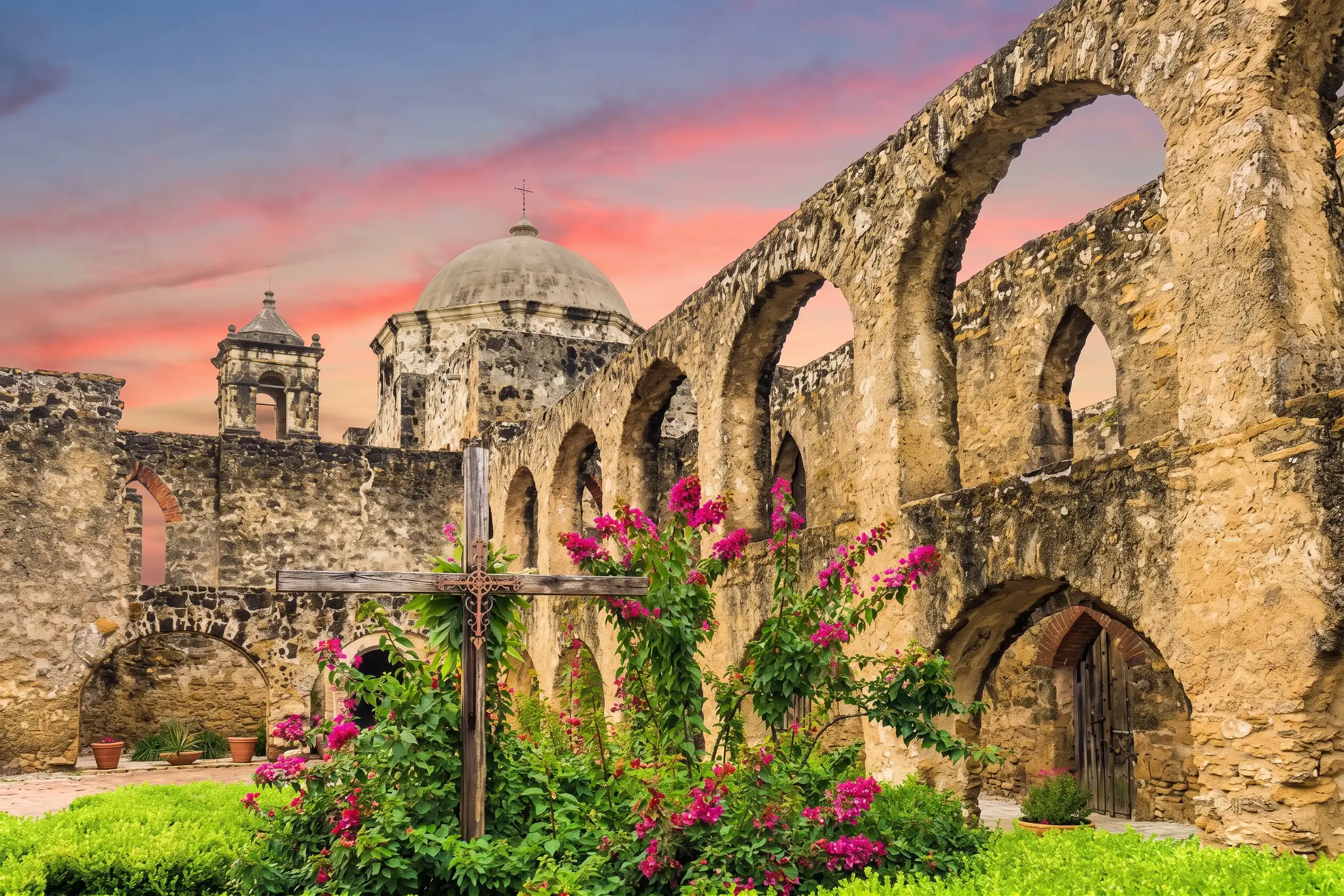
The park’s visitor facilities generally operate from 9 a.m. to 5 p.m. The missions are normally open daily except Thanksgiving, Christmas Day, and New Year’s Day, but individual buildings and church interiors may follow different schedules. Admission to all four National Park Service mission sites is free. Verify current hours before visiting because religious services, severe weather, maintenance, or preservation work may affect access.
Begin early if you plan to visit all four missions, especially during warmer months. Bring drinking water, comfortable walking shoes, and sun protection even if you are traveling by car. Remember that the churches belong to active Catholic parishes and are not ordinary museum galleries. Avoid flash photography, conversation, or unnecessary movement during services, and follow all posted restrictions.
Frequently Asked Questions
Is the Alamo Part of the National Historical Park?
No. The Alamo is one of the five sites within the UNESCO World Heritage designation, but it is not managed as part of San Antonio Missions National Historical Park. The National Park Service manages the other four missions.
How Long Does It Take to Visit All Four Missions?
The National Park Service recommends allowing approximately three to four hours. Mission San José usually takes the longest, while the other missions may require around 30 minutes each. Add more time for ranger programs, the Espada Aqueduct, or cycling.
Which Mission Should First-Time Visitors See?
Mission San José provides the most complete introduction because it has the main visitor center, exhibits, and the largest complex. Mission Concepción is useful when time is limited, and you are staying downtown. Seeing all four provides a fuller understanding than choosing only one.
Can You Walk Between All the Missions?
The Mission Reach trail connects the sites, but walking the entire route and returning requires considerable time. Cycling is more practical for many active visitors. Anyone using the trail should prepare for heat, distance, and limited shade.
Use This San Antonio Missions Guide to Plan Your Day
The four missions reward visitors who look beyond the architecture and consider the communities, labor, colonization, cultural change, and Indigenous resilience represented at each site. Begin at Mission San José if you want the strongest historical orientation, then visit the remaining missions according to your transportation, available time, and interests.
Use this San Antonio Missions guide to create a realistic route instead of squeezing the park between unrelated downtown attractions. Dream Travel Clips’ free travel planning guide can help organize transportation, operating hours, and the rest of your San Antonio itinerary.